
Export from India in 2026 presents massive growth opportunities for manufacturers, traders, MSMEs, and startups. With digitized customs systems, simplified compliance procedures, and expanding global demand for Indian products, starting an export business is now more structured than ever.
However, many new exporters struggle with IEC registration, GST compliance, export documentation, customs clearance, and international payment security.
This complete guide explains how to export from India in 2026 step by step, covering registration, shipping, export documents, GST rules, payment methods, and export incentives.
Quick Summary: How to Export from India in 2026
To export from India in 2026, you must:
- Choose the right export product and market
- Obtain an Importer Exporter Code (IEC)
- Complete GST registration
- Prepare export documentation
- Plan shipping and logistics
- Comply with customs procedures
- Secure international payment terms
- Claim export incentives
Why Start an Export from India Business in 2026?
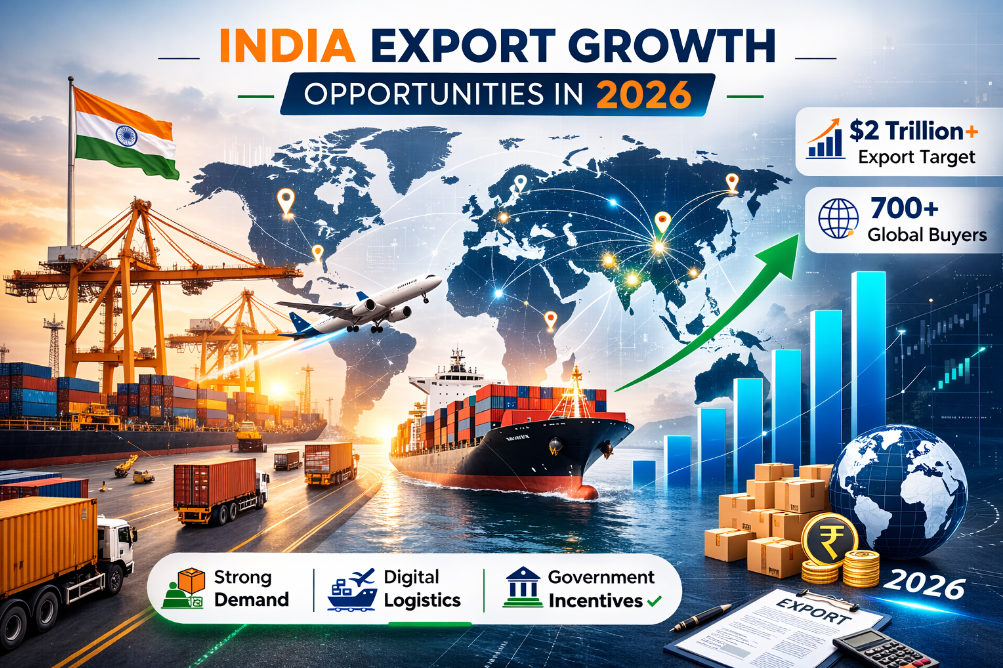
India is one of the fastest-growing export economies. Key export sectors include:
- Textiles and garments
- Spices and agro products
- Pharmaceuticals and chemicals
- Engineering goods
- Handicrafts and home décor
- Processed and organic food
Key Advantages in 2026
- Government export incentive schemes
- Expanding Free Trade Agreements (FTAs)
- Improved port and logistics infrastructure
- Fully digital customs clearance systems
- Strong global demand for Indian products
Exporting allows businesses to scale beyond domestic markets and earn in foreign currency.
Step 1: Choose the Right Product for Export
Before starting an export business, conduct detailed market research.
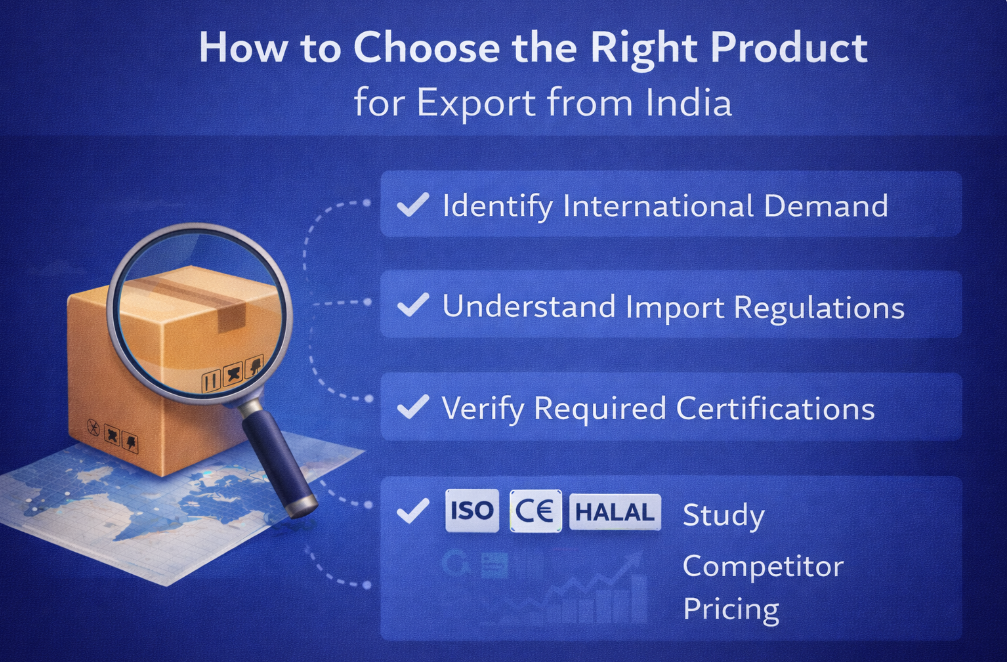
Research Checklist:
- Identify international demand
- Study competitor pricing
- Understand import regulations of the target country
- Verify required certifications (ISO, CE, Halal, Organic, etc.)
Selecting the right product and market reduces risk and improves profitability.
Step 2: Obtain Importer Exporter Code (IEC)
The Importer Exporter Code (IEC) is mandatory for exporting from India. It is issued by the Directorate General of Foreign Trade (DGFT).
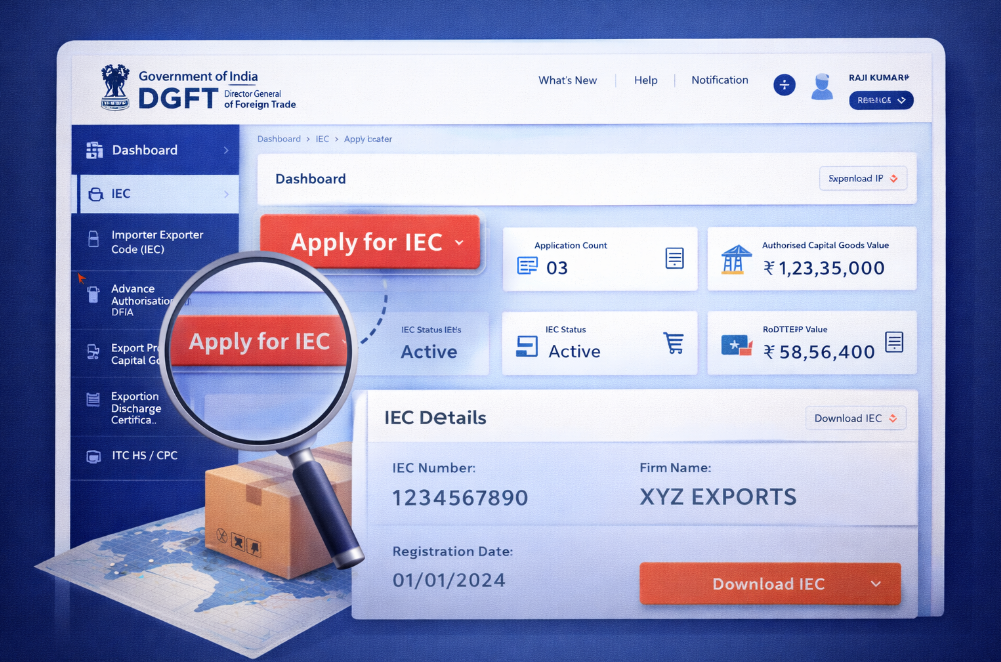
Documents Required:
- PAN card
- Business registration certificate
- Bank account details
Important Points:
- IEC is valid for lifetime
- No renewal required
- Mandatory for customs clearance and foreign payments
You can apply online through the official DGFT portal.
Step 3: Open a Current Bank Account for Export
To receive international payments:
- Open a business current account
- Link IEC with your bank
- Understand RBI foreign exchange regulations
Export proceeds must generally be realized within the permitted timeline (usually 9 months).
Banks assist exporters with:
- Letters of Credit (LC)
- Foreign currency transactions
- Export documentation support
Step 4: Understand Export Documentation
Accurate documentation ensures smooth customs clearance and timely shipment.
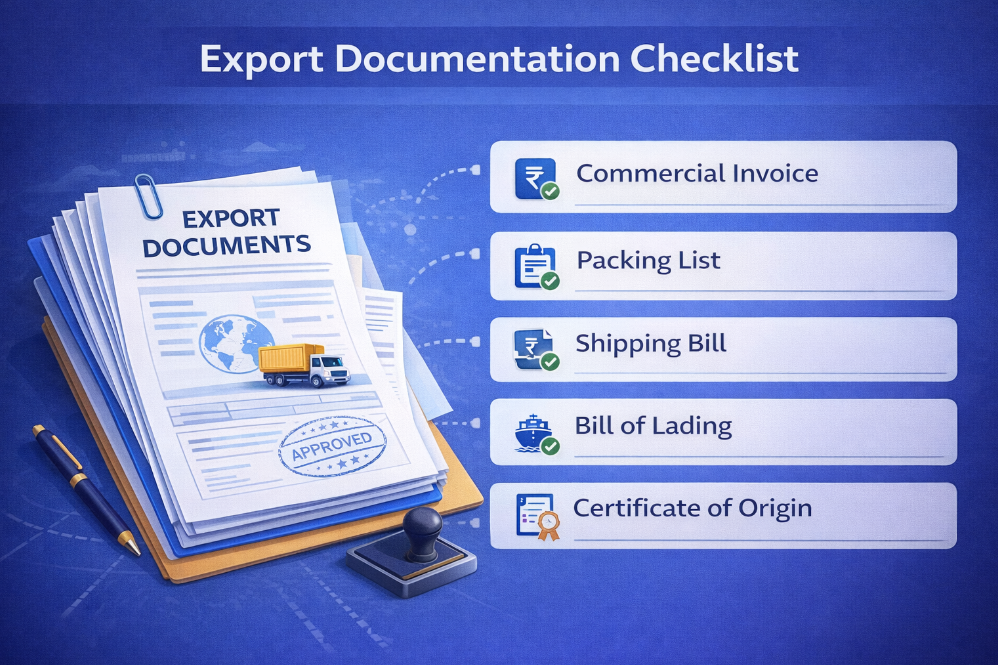
Main Export Documents:
- Commercial Invoice
- Packing List
- Shipping Bill
- Bill of Lading or Airway Bill
- Certificate of Origin
- GST export declaration
Additional Documents (If Applicable):
- Phytosanitary certificate
- Fumigation certificate
- Quality inspection certificate
- Product-specific approvals
Incorrect documentation is one of the biggest reasons for shipment delays.
Step 5: Plan Logistics and Shipping
You can export goods through different shipping modes:
Sea Freight
Cost-effective for bulk shipments.
Air Freight
Faster delivery but higher cost.
Courier Services
Best for samples and small consignments.
A freight forwarder assists with:
- Cargo booking
- Customs documentation
- Inland transport
- Shipment tracking
Step 6: GST and Customs Compliance
Exports from India are generally zero-rated under GST.
This means:
- No GST is charged on exports
- Exporters can claim refund of input GST
- Proper filing of Shipping Bill is mandatory
Export Incentive Schemes in 2026
- RoDTEP (Remission of Duties and Taxes on Exported Products)
- Duty Drawback
- State-level export promotion schemes
Always check the latest updates from DGFT and customs authorities.
Step 7: Decide Export Pricing and Payment Terms
Export Pricing Should Include:
- Manufacturing cost
- Packaging cost
- Inland transport
- Freight and insurance
- Bank charges
- Compliance costs
Common International Payment Terms
Advance Payment
Safest for exporters.
Letter of Credit (LC)
Bank guarantees payment upon document submission.
Documents Against Payment (D/P)
Buyer pays before receiving shipping documents.
Open Account
Payment after delivery; higher risk.
Secure payment terms protect cash flow and reduce export risk.
Step 8: Quality Control and Packaging Standards
International buyers demand:
- Consistent product quality
- Proper labeling
- Durable export packaging
- Compliance with destination country standards
Conduct pre-shipment inspections to avoid rejection and disputes.
Step 9: Risk Management in Export Business
Major export risks include:
- Currency fluctuations
- Shipment damage
- Customs delays
- Buyer non-payment
Risk Protection Methods:
- Export credit insurance
- Marine insurance
- Currency hedging
Proper risk planning ensures long-term export stability.
Step 10: Post-Shipment Process
After dispatch:
- Track shipment status
- Ensure customs clearance at destination
- Follow up for payment realization
- Maintain communication with buyer
- Plan repeat orders
Strong relationships build long-term international partnerships.
Frequently Asked Questions (FAQs)
How much investment is required to start exporting from India?
Investment depends on product category, scale, and target market. Small exporters can begin with limited capital using merchant export models.
Is GST mandatory for export?
Yes, GST registration is required for most businesses engaged in export activities.
Can individuals export from India?
Yes, individuals can export after obtaining IEC and completing required compliance.
How long does it take to start exporting?
IEC registration can be completed within days. However, finding buyers and preparing documentation may take several weeks.
Common Mistakes New Exporters Should Avoid
- Ignoring proper documentation
- Underpricing products
- Choosing unsafe payment terms
- Not verifying buyers
- Ignoring compliance requirements
Avoiding these mistakes increases export success rate.
Final Thoughts
Starting an export business from India in 2026 is a strong growth opportunity for manufacturers and traders. By following a structured process — registration, compliance, documentation, logistics planning, and secure payment terms — businesses can expand globally with confidence.
Export success depends on preparation, compliance, and reliable execution.
About EximHub
EximHub helps manufacturers, traders, and MSMEs navigate export compliance, documentation, logistics planning, and international buyer connections with structured support.
Ready to Start Exporting from India?
Contact EximHub today for expert guidance on IEC registration, export documentation, logistics coordination, and global market expansion.
Start your export journey with confidence.